Tuesday, December 30, 2008

Richmond, Virginia's Azalea Mall


Photo from "B1Bob" / Nat Atkins


AZALEA MALL, circa-1970. The fully-enclosed complex, the
first in Richmond -and Virginia- was one of the few shopping
malls in the nation to include Woolworth and Woolco stores.


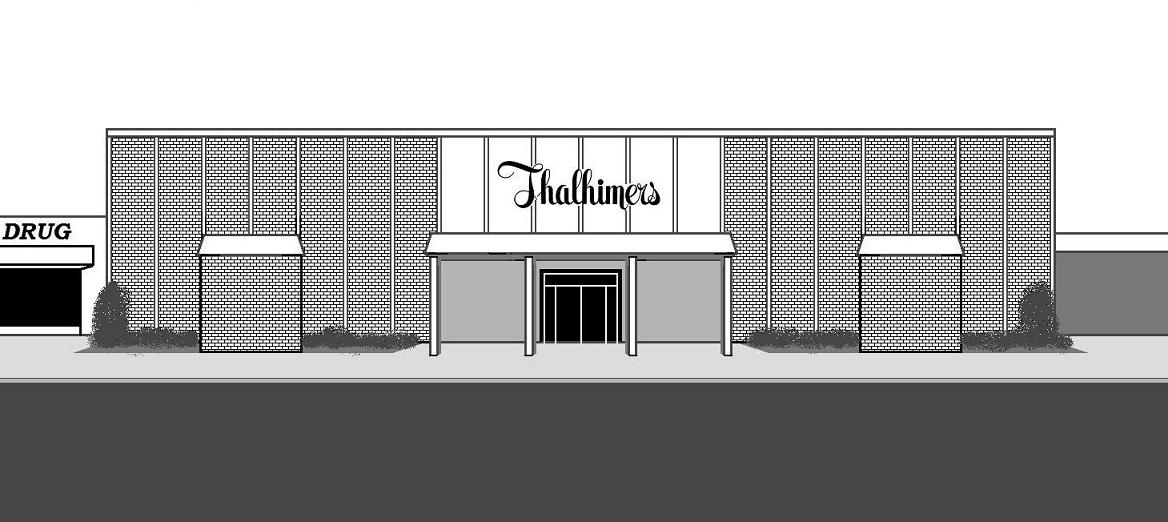
An exterior shot of the AZALEA MALL Thalhimers. This location was
the Richmond-based retailer's first suburban shopping center branch.
It was in operation between 1963 and 1991.
Photo from www.labelscar.com / Michael Lisicky


The mall's North Court, which fronted on the Thalhimers anchor
store.
Photo from www.labelscar.com / Michael Lisicky


South Court and the Peoples Drug storefront. The mall's South Entrance
is seen in the distance.
Photo from www.labelscar.com / Michael Lisicky


Looking southward from the mall entrance of Thalhimer's. The
nameplate of the Woolworth dime store can be seen in the backround.
Photo from www.labelscar.com / Michael Lisicky
AZALEA MALL
Azalea Avenue / US 1 and Brook Road
Henrico County, Virginia

Virginia first interior mall came inline in August of 1962. It occupied a 39.3 acre land parcel located 6 miles northwest of Richmond's Central Business District.

The mall site was south of the original northern terminus of the Richmond-Petersburg Turnpike, which had opened to traffic July 1, 1958. The bulk of the highway was designated as Interstate 95 in August of the same year.

AZALEA MALL encompassed 314,000 square feet. The single-level, community complex was anchored by a 1-level (79,000 square foot) Woolco; one of the earliest locations outside of Columbus, Ohio (where the very first stores had opened).

The mall also included an F.W. Woolworth 5 and 10, Food Fair supermarket, Peoples Drug, Thom McAn Shoes and The Home Shop. A 1-level (30,000 square foot), Richmond-based, Thalhimers opened in 1963 and was eventually expanded to 50,000 square feet.

Competing shopping venues in the "Northside" area included WILLOW LAWN CENTER / SHOPS AT WILLOW LAWN (1956), Richmond's first suburban retail complex, which was renovated into an enclosed mall in 1986.

There was also REGENCY SQUARE MALL (1975) and VIRGINIA CENTER COMMONS (1991), both in Henrico County. The opening of VIRGINIA CENTER COMMONS resulted in the decline and fall of AZALEA MALL during the early 1990s.

Store rebrandings began when Food Fair became a Pantry Pride, in 1981. Woolco was shuttered in 1983 and reopened as a Rocky Hill, Connecticut-based Ames in October 1984. Thalhimers held on till May 1991. Two years later, Ames closed, followed by Pantry Pride, which became a Superfresh supermarket.

With its two primary anchors sitting vacant, the mall eventually went under. Its owner, Holland-based DBA Associates, defaulted on their loan. The mall was auctioned off in May 1995 and razed in 1998. The site was never redeveloped and remains vacant to this day.

Sources:

B1Bob / Nat Atkins' Azalea Mall memories
Deadmalls.com Azalea Mall article / Brad Berry and David McGrann comments www.roadstothefuture.com
Henrico County, Virginia tax assessor website
Ames Fan Club website
Petersburg, Virginia's Walnut Mall


A circa-'67 physical layout of Petersburg-Richmond's WALNUT
MALL. The thirty-five store, community-sized center was never
physically expanded. It was eventually done in by the regional-
class SOUTHPARK MALL, which opened, in nearby Colonial
Heights, in 1989.


An early '90s shot of the retail hub, when it was still an operational
shopping center. Soon after, it would become a boarded-up eyesore.
It was to remain in that condition for fifteen years.
Photo from www.labelscar.com / Michael Lisicky


The mall entrance of the center's 67,000 square foot Thalhimers.
It was the Richmond-based chain's second suburban shopping mall
branch. The store opened in 1966 and was shuttered in 1991.
Photo from www.labelscar.com / Michael Lisicky


The J.C. Penney at WALNUT MALL was one of the few "new look" stores
built without an attached -or freestanding- Auto Center.
Photo from The Virginia Film Office


A deserted WALNUT MALL sits in anticipation of a wrecking ball reno-
vation that was to commence in the summer of 2006. The mid-century
shopping center was replaced by WALNUT HILL MARKET, a strip
center anchored by a Food Lion supermarket.
Photo from www.loopnet.com
WALNUT MALL
South Crater Road / US 301 and Walnut Boulevard
Petersburg, Virginia

The second fully-enclosed mall in the Richmond metropolis was built on a 16.9 acre tract, located 27 miles southeast of the Central Business District, in the suburb of Petersburg.

Encompassing 267,000 leasable square feet and approximately thirty-five stores and services, WALNUT MALL opened for business November 3, 1966. The single-level, community-sized center was anchored by a 1-level (67,000 square foot), Richmond-based Thalhimers and a 2-level (100,000 square foot) J.C. Penney.

Inline stores in the original mall included Peoples Drug, Rucker-Rosenstock, So-Fro Fabrics, Thom McAn Shoes, Kinney Shoes, Lerner Shops, Sandler's, Morton's Jewelers and Ward's TV and Appliance (a precursor of Circuit City).

The single-screen (850 seat) Walnut Mall Theatre opened in March 1967, in a front parking area block of stores. It was twinned in 1980, becoming the Walnut Mall I and II.

Billed as "The Shopping Showplace", WALNUT MALL prospered until the completion of SOUTHPARK MALL, in nearby Colonial Heights, in 1989. The newer, regional-class complex immediately snatched the older center's Penney's.

However, the Thalhimers location at WALNUT MALL remained open, competing with a new SOUTHPARK store, until it was permanently shuttered in May 1991. By this time, WALNUT MALL was virtually vacant. It was closed, boarded-up and sat -derelict and decaying- for fifteen years.

The first redevelopment plan, circa-1995, included plans for a new Home Depot and Kroger supermarket. This plan fell through. A second scenario proposed a new public library for the site. This never came to fruition, either.

Demolition of the mall structure commenced in August 2006, with the cinema outparcel left standing. This was incorporated into WALNUT HILL MARKET, an open-air strip center, featuring a 35,000 square foot Food Lion supermarket and eleven inline stores. The new shopping venue was dedicated May 23, 2007.

Sources:

www.labelscar.com / "Caldor"
Michael Lisicky
Information from "Straywulf"
www.deadmalls.com / Comment post by Laura Willoughby
http://www.cinematreasures.com/
Richmond, Virginia's Cloverleaf Mall


Photo from www.labelscar.com / Michael Lisicky


A circa-'72 site plan of Richmond's first regional-class interior mall.
The original center was anchored by Sears and Penney's. A third
anchor, Thalhimers, came inline in 1973. At that time, the addition
of a fourth anchor, Richmond-based Miller and Rhoads, was consider-
ed. However, this plan was thwarted by the leasing arrangement of an
existing M & R store in nearby SOUTHSIDE PLAZA.


CLOVERLEAF, as it was situated at the conclusion of the 1987 reno-
vation. A new, freestanding cinema had been built in the southwest
parking area. The original twin-screen venue inside the mall was
gutted and refashioned into a Food Court. The footpint depicted here
remained unchanged for the life of the shopping center. The only
major change was the rebranding of Thalhimers -as an Arlington-based
Hecht's- in 1992.


The Main Entrance of the shopping center. This reflects the interior and
exterior facelift given to the mall in 1987.
Photo from www.labelscar.com / Michael Lisicky


The Center Court area. By the time this photo was taken (in the
late 2000s) the fountain was dry and most of the eighty-sum
store spaces were vacant.
Photo from www.labelscar.com / Michael Lisicky


An abandoned J.C. Penney, which had been the west anchor of
CLOVERLEAF MALL. The store was shuttered in October 2000.
Photo from www.labelscar.com / Michael Lisicky


Sears, the mall's east anchor, closed its doors for the last time in
January 2003.
Photo from www.labelscar.com / Michael Lisicky


A rendering depicting the new CHIPPENHAM PLACE...make that
STONEBRIDGE...complex. The mixed-use facility, a complete
redevelopment of the old CLOVERLEAF MALL, is to include retail,
office and residential components and feature a 125,000 square
foot Kroger supermarket.
Rendering from www.crosland.com
CLOVERLEAF MALL
Midlothian Turnpike / US 60 and Chippenham Parkway
Chesterfield County, Virginia

The third fully-enclosed shopping center in Metropolitan Richmond, EASTGATE MALL, was completed in 1968. Like its two predecessors, it was a smaller, community-sized complex.

In August 1972, the area's first regional-class shopping mall opened for business. CLOVERLEAF MALL, developed by Leonard Farber, sat upon 83 acres, 6.5 miles southwest of the center city. The complex was situated at the "cloverleaf" intersection of US Route 60 and the Chippenham Parkway.

The original anchors of the single-level retail hub were a 2-level (122,000 square foot) Sears and 2-level (123,000 square foot) J.C. Penney.

Among the forty-five charter tenants were Harmony Hut Records, Peoples Drug, Waldenbooks, Kinney Shoes, Hofheimer's Shoes, Stuarts ladies apparel, Piccadilly Cafeteria and a J.G. McCrory 5 and 10. The twin-screen, Cloverleaf Mall Cinema was located at the end of the original South Wing.

In 1973, the wing was extended to a 1-level (63,000 square foot), Richmond-based Thalhimers. This addition included approximately twenty new stores. CLOVERLEAF MALL now ecompassed 741,400 leasable square feet and was promoted as "The Fashion Center of Richmond".

Regional-class rivals soon appeared. REGENCY SQUARE MALL, in Henrico County, opened in 1975. Although not a large-scale shopping center at first, CHESTERFIELD TOWNE CENTER (1975), in Chesterfield County, was eventually expanded to over one million square feet.

A thorough renovation of CLOVERLEAF MALL was undertaken in February 1987 which included an interior and exterior facelift. A new 8-plex cinema was built at the southwest corner of the site, with the original, interior-accessed venue made into an 8-bay Food Court.

The only anchor store rebranding in the history of CLOVERLEAF MALL took place in 1992, when the Thalhimers chain was acquired by May Company and merged with Arlington, Virginia-based Hecht's. By this time, the CLOVERLEAF store had been expanded into a 2-level (126,000 square foot) location.

CLOVERLEAF MALL was beginning to decline in 1996, when a brutal double murder occurred at the shopping center. Some locals also feel that the image of the mall was hurt by the proliferation of unruly teenagers who began to frequent the complex, scaring off droves of shoppers in the process.

J.C. Penney became the first anchor store to bolt from the mall in October 2000. The 8-plex movie house was shuttered in October 2001. Sears, which had been downsized into a 1-level operation, closed in January 2003. Hecht's followed in July.

The final nail in the proverbial coffin was driven in 2003, with the dedication of STONY POINT FASHION PARK; a new, lifestyle-format shopping complex in Richmond.

In the ensuing years, redevelopment plans for the the anchorless and abandoned CLOVERLEAF MALL came and went. One of the more noteworthy came about in 2004, when Richmond-based Faith Alive Ministries offered to buy the mall and convert it into a megachurch complex.

The powers that be of Chesterfield County balked at this offer. Some opined that a church-based development, producing no tax revenues, would not be fortuitous for the area. In the end, the county itself bought the property.

Two different developers were enlisted to assist in remaking the mall...all to no avail. A third company, Charlotte-based Crosland Investments, came on the scene in January 2007.

Crosland proposed a mixed-use project, anchored by a 125,000 square foot Kroger. Tentatively known as CHIPPENHAM PLACE, it was to include 100,000 square feet of inline retail, as well as residential units and office space.

On February 29, 2008, CLOVERLEAF MALL closed for good. Redevelopment plans went ahead on schedule, with STONEBRIDGE being adopted as the official name of the complex-to-be in October 2008.

At present, the CLOVERLEAF MALL structure awaits demolition, with construction on its replacement slated to commence soon after.

Sources:

www.labelscar.com / "Caldor"
Michael Lisicky
Comment post on Labelscar by "Bobby"
www.deadmalls.com / Post by Janet Perkins
www.cinematreasures.com
http://www.chesterfield.gov/
Virginia Beach, Virginia's Pembroke Mall


The original, 565,000 square foot, forty-five store shopopolis, the first
interior mall in Virginia's Hampton Roads area. This site plan depicts
the mall as it was situated at its official dedication in March 1966.


The mall, following its early '80s expansion. A third anchor, Virginia
Beach-based Rices-Nachmans, had joined Sears and Miller and Rhoads.
PEMBROKE now encompassed 713,600 leasable square feet.


A 34,100 square foot Cineplex Odeon 8-screen theater was added to
the seven year-old North Wing in 1988. This increased the GLA of
the shopping center to 747,800 square feet. The old twin-plex, in the
northeast parking area, was razed.


One of the center's Main Entrances. These access the South Wing, added
to the mall in 1981.
Photo from www.placestogoinvb.com


An interior shot of the East Wing. Kohl's opened their store in 2003.
The space was originally a Richmond-based Miller and Rhoads.
Photo from www.joneslanglasalle.com


An early '00s renovation and repositioning of PEMBROKE MALL coincided
with the construction of the TOWN CENTER project across the street from
the shopping center. The mixed-use complex, to be built in four phases,
includes retail, hotel and office space. It was conceived as a new
commercial and civic center for the city of Virginia Beach.
Photo from Wikipedia / "Kubigula"


Today's PEMBROKE MALL. Renovations done between 2002 and 2007
reduced the size of the mall proper by 90,000 square feet but added new
restaurants and a bank to the front parking area. The center now has
654,000 leasable square feet and one hundred stores and services.
PEMBROKE MALL
Virginia Beach Boulevard / US 58 and Independence Boulevard
Virginia Beach, Virginia

In March 1965, construction commenced on the first interior mall in Virginia's Hampton Roads area. The center, to be known as PEMBROKE MALL, was developed by Pembroke Square Associates and built on 51.2 acres at the budding commercial center of Virginia Beach.

The "independent city" had been formed three years earlier from the amalgamation of a small resort town and the previously-existing Princess Anne County. In the Commonwealth of Virginia, an "independent city" is a seperate and complete political entity and is not part of any county.

At its official grand opening in March 1966, PEMBROKE MALL encompassed 564,900 leasable square feet, with a retail roster of twenty-one inline stores. With the completion of construction, this total increased to forty-five.

The single-level shopping venue was anchored by a 2-level (157,700 square foot) Sears and 1-level (88,400 square foot), Richmond-based Miller and Rhoads.

There were also Willner's, Hofheimer's Shoes and an F.W. Woolworth 5 and 10. The twin-screen, Pembroke Mall Ultra-Vision Theatre, a northeastern parking area outparcel, was in business by 1967.

A major expansion was completed in 1981. This consisted of additions to the northeast and south. The North Wing, comprising 100,000 square feet, was anchored by a 1-level (56,200 square foot), Virginia Beach-based Rices-Nachmans.

On the mall's south-facing front was built a 48,700 square foot wing, which included Annabelle's Restaurant and approximately fourteen store spaces. PEMBROKE MALL now encompassed 713,600 leasable square feet.

A second expansion, concluded in 1988, added the 8-screen Cineplex Odeon Pembroke Theatre to the North Wing. The original, twin-screen cinema was demolished. The GLA of the mall was increased to 747,800 square feet.

Rival shopping centers in the immediate vacinity were MILITARY CIRCLE MALL [now GALLERY AT MILITARY CIRCLE] (1970), in Norfolk, LYNNHAVEN MALL (1981) in Virginia Beach and GREENBRIER MALL (1982) in Chesapeake.

Rices-Nachmans became the first anchor in the mall to change nameplates. The location became an Allentown, Pennsylvania-based Hess's in 1985. Maryville, Tennessee-based Proffitt's rebranded the store in 1993. Dillard's went into the space in 1997 and closed in July 2002. For a short time afterward, the building was leased as a Freight Liquidators furniture outlet.

Miller and Rhoads, the mall's east anchor, was shuttered in January 1990. The space was taken by Norcross, Georgia-based Uptons. This chain folded in 1999. The building sat vacant until Menomonee Falls, Wisconsin-based Kohl's remodeled the structure and opened a store in 2003.

By this time, PEMBROKE MALL was being given a major overhaul and new marketing focus. Over the years, the complex had declined from a regional-class, national chain shopping venue into more of a community-format center, tenanted by local retailers.

The mall's physical makeover consisted of an interior facelift, with new carpet, ceilings and store fronts. A 6-bay Food Court was installed in the South Wing.

A more "pedestrian friendly" format was given to the exterior. Front-facing stores had exterior entrances and new facades built and three outparcel restaurants were constructed in the parking area. These improvements were tied in with the New Urbanist TOWN CENTER project across the boulevard; its first phase being dedicated in 2003.

The final phase of the metamorphosis at PEMBROKE MALL, undertaken in the fall of 2006, involved the demolition of the Rices-Nachman's / Dillard's anchor and most of the North Wing. The 8-plex movie house, now owned and operated by Regal Cinemas, was left standing. The physical size of complex was reduced to 654,000 leasable square feet, with a compliment of one hundred stores and services.

As part of its repositioning, PEMBROKE MALL was tenanted with more nationally-based retailers, such as Pacsun and Hot Topic...in an effort to recapture its former position as a more trendy, regional-class shopping venue.

Sources:

"Pembroke Mall" article on Wikipedia
"Virginia Beach" article on Wikipedia
www.joneslanglasalle.com
www.pembrokemall.com
www.vbgov.com
"Town Center" article on Wikipedia

Wednesday, December 17, 2008

Southern California's
Newport Fashion Island


The primary anchor of the center, J.W. Robinson...with Buffums' in the
background. At the center of the photo is the renowned wind chimes,
reputedly the world's largest. The fixture was designed by conceptual
artist Tom Van Sant.


A late '60s view of the Central Courtyard and Broadway anchor store.
The Skydivers Statue, created by Aristides Dimetrios, is still a fixture
at the mall. It was relocated to a reconfigured Atrium Lawn area during
a 1984-1989 renovation of the shopping center.
Photo from Orange County Illustrated (circa-1977) /
www.ochistorical.blogspot.com / Chris Jepsen


FASHION ISLAND, circa 1968. The 900,000 square foot complex
was built on land where the July 1953 National Scout Jamboree
had been held. The site had also been under consideration for the
original Disneyland (eventually built in nearby Anahiem). At its
formal dedication, held September 9, 1967, the shopping center
featured fifty-two stores and services.

FASHION ISLAND TENANTS 1968:

THE BROADWAY (with outparcel Tire Center)/ J.C. PENNEY (with Restaurant and outparcel Auto Center) / J.W. ROBINSON (with Restaurant) / BUFFUMS' (with Restaurant) / Silverwoods for Men / Pickwick Fashions / Judy's apparel / Chris Fashions / Desmonds apparel / Di Orrio's / Newport Children's Bootery / Leed's Qualicraft Shoes / Waltah Clark's Hawaiian Shop / Motherhood Maternity / Phelps Wilger / Show-Off / Apropos / The Look / Lerner Shops / Youngland / Sam Bork Originals / Gentry Shop / Robert Burn's Cutty Sark Restaurant / Ontra Cafeteria / Northcott's Restaurant / Coco's Restaurant / Jolly Roger Restaurant / Zale's Jewelers / Slavick's Jewelers / Clark's Jewelers / Brett-Walker Goldsmith / Hallmark of Newport / Neal's Sporting Goods / B. Dalton Bookseller / Westrook's Yardage / The Tobacconist / Russo's Pets / See's Candies / Bath Shop / Mediterannean Imports / Newport Candle Center / Karl's Toys / Warren's Stereo / Plummer's / KOCM-FM Studios / Newport Beauty Salon / Newport Barber Shop / Newport Florist / Newport Shoe Repair / Island House Community Meeting Room


The mall as it was situated at the conclusion of its first expansion,
completed in 1978. The center now encompassed 1.2 million square
feet and housed seventy retailers. Neiman Marcus and Bullock's
Wilshire served as its fifth and sixth anchor stores.


A circa-1990 site plan. By 1982, FASHION ISLAND had become
too tony for J.C. Penney. Their vacated store was rebuilt into the
3-level, fully-enclosed Atrium Court. It opened, as the first phase
of the mall's "Renaissance" redevelopment, in 1985. The one hun-
dred and fifteen million dollar makeover (indicated in medium
gray) was completed in late 1989.


An advert announcing the grand opening of the Edwards Island 7
Cinemas, which took place October 6, 1989.
Ad from www.fromscripttodvd.com


Photo from www.mitchglaser.com


FASHION ISLAND and Newport Center signage.
Photo from Wikipedia / "CoolCaesar"


The Iris Fountain, with its fifty foot-high towers of water. The mall's
second Food Court, the Island Terrace, overlooks the area.
Photo from www.mitchglaser.com


A roofed paseo, with views of the Atrium Park and Koi Pond Court.
Photo from www.lodging4vacations.com


The largest anchor store in the complex, the 225,000 square foot
Macy's, started out as an L.A.-based J.W. Robinson in 1967.
Photo from www.mitchglaser.com


One of the "Outdoor Paseos" at FASHION SQUARE. Here we see the
southwest promenade, added to the mall in the late 1970s. The Macy's
seen in the foreground sported four different nameplates over its thirty
year existence. The building was razed in 2007.


A bird's eye view of the southwest-facing front of FASHION ISLAND.
The white anchor store on the left, originally an L.A.-based Bullock's
Wilshire, was recently razed. A new Nordstrom is being built to
replace it.
Photo from www.cdowntownmakeover.com


An aerial of So-Cal's Newport Center, with FASHION ISLAND occupying
the space within its circular roadway. Serving as the commercial and
civic center of the planned community of Newport Beach, Newport
Center was conceived in the early 1960s.
Photo from Wikipedia / "TF Norman"


A current site plan of Orange County's most upscale, open-air
shopping center. A fourth expansion is underway, which will
add a Nordstrom to the roster of ritzy retailers. The 138,000
square foot store, similar to one being built at L.A. County's
LOS CERRITOS CENTER (see next article), will be completed
sometime in 2010.


Billed as the nation's largest Christmas tree, the 120 foot tall tannen-
baum, erected every November at FASHION ISLAND, has become
an Orange County yuletide tradition.
Photo from Newport Beach Convention and Visitors Bureau

FASHION ISLAND
Newport Center and San Miguel Drives
Newport Beach, California

Ground was broken for Orange County, California's sixth shopping mall on August 20, 1965. An open-air center was to occupy an 87 acre plot on land that was part of the 93,000 acre Irvine ["ir-viyn"] Ranch. The mall site sat 47 miles southeast of downtown Los Angeles, in the coastal, planned community of Newport Beach.

Renowned architect William Pereira had been commissioned in 1960 to devise a master plan for development of the area. In his prospectus, a commercial district, known as Newport Center, was to serve as the nucleus of the project. Its epicenter was to be FASHION ISLAND, a 909,000 square foot, single level shopping complex.

Designed predominantly by Pereira and Welton Becket and Associates, the 20 million dollar retail hub was developed by the Irvine Company. Its architecture was a blending of Internationalist Style and Spanish Revival, with tile roofs, fountains and open courtyards.

Anchoring FASHION ISLAND were a 3-level (225,000 square foot), Los Angeles-based J.W. Robinson, 3-level (188,000 square foot), Los Angeles-based The Broadway, 3-level (186,000 square foot) J.C. Penney and 2-level (80,000 square foot), Long Beach-based Buffums'.

Inline stores included Apropos, The Look, Carl's Toys, Jolly Roger Restaurant and Silverwoods for Men. The fifty-two store center was dedicated, with the gala "Flight To Fashion Island" champagne soiree, September 9, 1967. The outparcel Edwards Newport Cinema (a 1,350 seat, single-screen venue) was completed in early 1968.

The major retail rival of FASHION ISLAND was -and has remained- Costa Mesa's SOUTH COAST PLAZA (1967) [May 2008 archive] and, to a lesser extent, IRVINE SPECTRUM CENTER (1995).

Two anchor department stores joined the retail roster during the 1970s. A 2-level (80,000 square foot), Los Angeles-based Bullock's Wilshire opened August 1, 1977, as part of a new West Wing. Dallas-based Neiman Marcus' 2-level (118,000 square foot) store was dedicated March 3, 1978.

By the early 1980s, studies were showing that SOUTH COAST PLAZA had gained a competitive edge over FASHION ISLAND. The Irvine Company announced a 5-year, 115 million dollar "Renaissance" makeover in April 1984.

The renovation, conceptualized by Jon Jerde, was completed in three phases. The first involved the conversion of the the J.C. Penney, vacated in April 1982, into the 3-level, fully-enclosed Atrium Court. It featured a lower level Food Court, over twenty new store spaces and opened in 1985.

During Phase Two, new tile work and landscaping were added. Phase Three, which was concluded in late 1989, was a major reworking of mall structures, utilyzing a Mediterranean motif.

Over 70,000 square feet -and sixty stores- were added, including the Island Terrace (a second Food Court) and a 4-level parking structure. The Edwards Island Cinemas 7 was dedicated October 6, 1989. It replaced the older -outparcel- theatrical venue which had opened in 1968.

Anchor alterations at FASHION ISLAND began February 1, 1990, with the reopening of Bullock's Wilshire as a San Francisco-based I. Magnin. Buffums' was shuttered in 1991 and subdivided into smaller stores.

Next came the rebranding of J.W. Robinson as Robinsons-May on January 31, 1993. I. Magnin, shuttered in January 1995, morphed back into a Bullock's (Women's) store in June of the same year. This eventually became the mall's first Macy's location (a Women's store). It closed in September 2006, as a result of the Macy's-May merger.

On September 9, the Macy's operation at FASHION ISLAND reopened (as a full-line store) in the former Robinsons-May building. Meanwhile, in the autumn of 1996, The Broadway had been rebranded as a Bloomingdale's. The existing Neiman Marcus had a third level added in 2005, increasing its area to 153,000 square feet.

FASHION ISLAND, promoted as "Orange County's luxury coastal shopping destination", now features nearly two hundred department stores, entertainment venues, boutiques and bistros. It encompasses 1.3 million leasable square feet and four parking decks.

A fourth expansion is currently underway. A 2-level (80,000 square foot) structure is being built, adjacent to the northeast side of the Atrium Court. It will include Dick's Sporting Goods, a Dean and deLuca Gourmet Grocery, and should be completed in the summer of 2009.

Moreover, the old Bullock's Wilshire / I. Magnin / Macy's Women's structure has been demolished. It is being replaced by a 2-level (138,000 square foot) Nordstrom, which will be the sixth full-line store in Orange County. Completion is slated for 2010.

Sources:

"Fashion Island" article on Wikipedia
www.shopfashionisland.com
www.irvinecompany.com
www.ochistorical.blogspot.com
www.mitchglaser.com
Southern California's
Los Cerritos Center


The original 1,141,900 square foot, one hundred and twenty
store complex. The exterior of the structure was given a
park-like setting, surrounded by patches of lushly-landscaped
greenspace, which served to hide its barren, concrete exterior
walls from view.


The original retail center's South Mall and Woolworth junior anchor.
Photo from Malls of America Blogspot


LOS CERRITOS CENTER, following its 1980-1981
expansion. A 117,800 square foot Nordstrom had
been added, along with nineteen new store spaces. The
mall now housed 1,290,000 leasable square feet and
one hundred and fifty retailers and restaurants.


A circa-1980s shot of the South Mall corridor.
Photo from Southern California Rapid Transit District


A contemporary photo of the mall's Ohrbachs / Mervyn's / Forever 21
Court.
Photo from Jason A.


One of the circa-'70s center's four anchors, Robinsons-May, nee J.W.
Robinson, was shuttered in 2006. The store was knocked down in
October 2008.
Photo from Jason A.


A present-day site plan. The mall is in the midst of its third
expansion, that is replacing the demolished J.W. Robinson /
Robinsons-May with a new Nordstrom. The 138,000 square
foot store is slated for a 2010 dedication. After the shuttering
of all Mervyn's stores in January 2009, the LOS CERRITOS
location will reopen as large-format Forever 21.
LOS CERRITOS CENTER
South Street and Gridley Road
Cerritos, California

Los Angeles County witnessed the grand openings of two fully-enclosed, superregional shopping malls during the autumn of 1971. The first phase of stores at LOS CERRITOS CENTER came inline September 13, with the first unit of retailers beginning business at NORTHRIDGE FASHION CENTER on September 17.

LOS CERRITOS CENTER was developed by the La Jolla, California-based Ernest W. Hahn Company and constructed on a 97 acre plot, 20 miles southeast of center city Los Angeles. The site was adjacent to the San Gabriel River Freeway / Interstate 605, with the section passing by the mall opened to traffic on July 27, 1966.

The original, single-level complex opened in three phases. A 3-level (174,500 square foot) The Broadway and 3-level (145,600 square foot) J.W. Robinson, and the accompanying South Wing, were dedicated September 13, 1971.

A 2-level (85,600 square foot), New York City-based Ohrbach's, and adjacent stores, came inline March 24, 1972. The complex was completed with the dedication of a 3-level (277,500 square foot) Sears, and thirty-six store North Wing, May 11, 1972.

A compliment of one hundred and twenty stores and services were housed in the forty million dollar, 1,141,900 square foot shopping venue. Inline stores in the circa-'70s center included Roos-Atkins apparel, Bakers Shoes, Lane Bryant, The Limited and an F.W. Woolworth 5 and 10 with Harvest House Cafeteria.

There were also two cinematic venues at the shopping center. Along the South Wing was the United Artists Mall Cinemas 4. The outparcel United Artists Cerritos Twin A and B was situated in the southwest corner of the site, adjacent to Interstate 605.

Commercial competitors of LOS CERRITOS CENTER included LAKEWOOD CENTER (1951) [October 2009 archive], STONEWOOD CENTER (1958), in Downey and BEUNA PARK MALL (1961), in Orange County.

LOS CERRITOS CENTER was expanded with a 2-level (117,800 square foot) Nordstrom and nineteen new stores. These were officially dedicated April 12, 1981. The mall now spanned 1,290,000 leasable square feet and housed one hundred and fifty stores and services.

The first anchor rebranding took place after Ohrbach's was shuttered, in December 1986. The store reopened as a Mervyn's in April 1987. Next came the rebranding of J.W. Robinson, as a Robinsons-May, on January 31, 1993. Lastly, The Broadway was "Macy-ated" in early 1996.

A major renovation was given the mall during 1994, with the original stained glass skylights replaced, marble and stone floors installed throughout and the 13-bay Palm Court Cafes Food Court built in previously-existing space on the North Wing.

Moreover, each of the three mallways were designated with a specific name and marketing focus. The Garden extended between Mervyn's and Sears and had a family entertainment orientation.

The Grand Hall ran from Nordstrom to Robinsons-May; its theme being high fashion. Lastly, there was The Avenue, between Robinsons-May and The Broadway / Macy's. It was geared toward more general merchandise.

By this time, the two cinemas at the mall had closed. With the shuttering of Woolworth in 1997, a space was provided for the new United Artists Galaxy 11 stadium seating multiplex. The 2-level venue was dedicated in December 1998.

LOS CERRITOS CENTER was owned by the Australia-based Westfield Group between November 1998 and May 1999, when it was acquired by the Santa Monica-based Macerich Company.

Today, the center houses over one hundred and eighty retailers and restaurants. It is undergoing its fourth renovation, which got underway in 2008.

Robinsons-May, shuttered in late 2006, was demolished in October 2008. In its place is being built a 2-level (138,000 square foot) Nordstrom, that will replace the circa-1981 store in the spring of 2010.

The old Nordstrom will then be razed and replaced by 36,500 square feet of new stores and restaurants.

Sources:

"Los Cerritos Center" article on Wikipedia
Malls of America Blogspot / Keith Milford webmaster
www.shoploscerritos.com
www.macerich.com
www.movietheatre.org
www.mitchglaser.com
Los Angeles County, California tax assessor website
Los Angeles'
Northridge Fashion Center


Photo from Malls of America Blogspot / Don Fields


Two vintage views. The one directly above was taken in the
"Lower Mall", looking southward. A Sears nameplate may be
seen in the distance.
Photo from Malls of America Blogspot / Don Fields


NORTHRIDGE FASHION CENTER
TENANTS 1972 (PARTIAL LIST):

SEARS (with outparcel Auto and Garden Centers) / BULLOCK'S / THE BROADWAY (with outparcel Tire Center) / J.C. PENNEY (with outparcel Auto Center) / Security Pacific National Bank / Great Western Savings and Loan / Waldenbooks / El Poco Candles / See's Candies / Valley Hallmark / Glenda's Party Cove / Plum Tree / Spencer Gifts / Cousin's children's apparel / Pay Less Drug / House of Fabrics / Hickory Farms of Ohio / Morrow's Nut House / The Home Shop / Baskin-Robbins Ice Cream / Jeans West / Slavick's Jewelers / Weisfield's Jewelers / Zale's Jewelers / Gordon's Jewelers / Motherhood Maternity / Chess King apparel / Oliver's apparel / Tie Rack / Photo Tots / Disc Records / Singer Sewing Center / Chandler's Shoes / Comar's Shoes / Flagg Brothers Shoes / Florsheim Shoes / GallenKamp Shoes / Leed's Qualicraft Shoes / Miles Shoes / Regal Shoes / Thom McAn Shoes / Wetherby Kayser Shoes / California Sportsman / Tinder Box tobacco / National Uniform / Anita Shops / Hartfield's / Contempo Casuals / Judy's / Size 5-7-9 Shops / Foxmoor Casuals / Petries / Tamara's Fashions / Women's World / Windsor Fashions / Charlston's Fashions / Desmond's apparel / Hodel's Buffet / Anna Miller's Pies / Fiddlers Three Restaurant / Don Ricardo's Restaurant / Kaplan's Restaurant / Orange Julius / Pretzel 'N Cheese / Wild Pair Jeans


A physical layout, circa-1972. The four anchor shop-
opolis spanned 1,373,000 leasable square feet, with a
retail roster of one hundred and twenty stores. It was
So-Cal's largest interior mall for several years.


NORTHRIDGE, as it was configured at the completion
of the 1987-'89 expansion. Two new anchors came inline;
May Company and J.W. Robinson. Two parking garages
were also built. The complex now encompassed 1.5 million
leasable square feet, with one hundred and fifty stores
and services.


Retail-related rubble. The NORTHRIDGE Bullock's had been the first
anchor to open at the mall, in September 1971. The totally decimated
store was the last to reopen, following the Northridge temblor of January
1994.
Photo from J. Dewey / US Geological Survey


The Northwest Garage, or at least what remained of it following the
January '94 shake-up.
Photo from E.V. Leyendecker / US Geological Survey


Interior views of the double-decked mallway at NORTHRIDGE
FASHION CENTER. The barrel vaulted skylights were added
during post-quake renovations.
Photos from www.mortenson.com (Mortenson Construction)


Originally an L.A.-based Bullock's, it was the NORTHRIDGE store most
damaged by the 1994 earthquake. It was rebuilt and rebranded as a
Macy's in 1996.
Photo from www.familyvacationgetaways.com / Vicki Funes


The "Mediterranean Garden Court" at the north end of the mall.
Previously an enclosed court area, it was opened up -along with a
vacant The Broadway store- during a late '90s remodel.
Photo from www.mortenson.com (Mortenson Construction)


Two views of the old The Broadway store, now a part of the open-air
promenade on the north end of NORTHRIDGE FASHION CENTER.
Photos from http://www.familyvacationgetaways.com/ / Vicki Funes


Today's NORTHRIDGE FASHION CENTER. For years the
largest mall in L.A.'s San Fernando Valley, the 1.5 million
square foot shopping center was bumped down to the number
two position following the 2005-2008 expansion of WESTFIELD
TOPANGA.
NORTHRIDGE FASHION CENTER
Tampa Avenue and Nordhoff Street
Los Angeles, California

The groundbreaking for L.A. County's fourth fully-enclosed, regional shopping center took place July 28, 1970. The 2-level, sixty million dollar complex was built on a 72 acre plot, 25 miles northwest of the center city, in the northwestern sector of the San Fernando Valley.

NORTHRIDGE FASHION CENTER was opened in four phases. The first, including a 3-level (175,000 square foot) Bullock's, came inline September 17, 1971. The Broadway (encompassing 3-levels and 181,400 square feet) began business October 18, 1971.

The third phase of openings, including a 3-level (220,600 square foot) Sears, was dedicated November 3, 1971. The 4-level (181,600 square foot) J.C. Penney -the largest in the Los Angeles metro- opened April 12, 1972.

Encompassing one hundred and forty stores and services and two parking garages, NORTHRIDGE spanned 1,373,000 leasable square feet and was the largest interior mall in Southern California.

Inline stores in the original shopping center included Pay Less Drug, Hartfield's, House of Fabrics, Hickory Farms of Ohio and Disc Records. The "Lower Mall" level featured the Northridge Cinemas I-II-III.

Retail rivals in and around "The Valley" included SHERMAN OAKS FASHION SQUARE (1962) [December 2007 archive], FALLBROOK SQUARE (1963-1966) [May 2007 archive], TOPANGA PLAZA (1964) [May 2008 archive] and SHERMAN OAKS GALLERIA (1980).

Work got underway on a twenty million dollar expansion of NORTHRIDGE FASHION SQUARE in April 1987. The project entailed the addition of a 3-level (143,300 square foot) J.W. Robinson and Northwest Wing of Upper Level stores. The new Robinson's was dedicated September 8, 1988.

A 3-level (139,000 square foot) May Company of California, and Lower Level Southwest Wing, came inline in late 1989. Two new parking garages were also built; one at the northwest corner of the property (adjacent to Robinson's) and the other at the southwest corner (connecting to May Company).

NORTHRIDGE FASHION SQUARE had been in the early stages of construction when the Sylmar quake hit on February 9, 1971. There was damage to structures being built, such as the Bullock's store. However, all compromised construction was soon rebuilt, with work proceeding as planned.

Unfortunately, the Northridge temblor of January 17, 1994 caused severe damage to the mall. The Bullock's and Penney's stores collapsed, The Broadway and Sears suffered significant structural damage and two parking garages were leveled. However, the bulk of the mall proper was left fairly intact.

NORTHRIDGE was closed for well over a year while repairs were made. Bullock's was rebuilt from the ground up and expanded to 200,000 square feet. The Broadway, Penney's and Sears were gutted and reconstructed.

The Broadway became the first of the damaged anchor stores to reopen, on November 4, 1994. Sears returned on November 17. May Company (which had been converted to Robinsons-May South in January 1993), as well as Robinson's (rebranded as Robinsons-May North), came back inline in the spring of 1995. Penney's reopened their store June 14.

A soft reopening of the mall proper, with a third of its stores coming back inline, was held on July 17, 1995. Bullock's, the store most devastated by the disaster, was rededicated August 10.

During the reconstruction process, the mall was updated with new barrel vaulted skylights, elevators, escalators, marble walls and flooring. In addition, a 15-bay Food Court was installed on the Upper Level.

One of the leveled parking garages was rebuilt. The remains of the second damaged deck, which had been at the northwest corner of the mall site, were removed. This structure was not replaced.

Anchor store rebrandings at NORTHRIDGE had commenced with the Robinsons-May conversion of early 1993. The next anchor to change was The Broadway, which closed in early 1996. Bullock's was "Macy-ated" in April of the same year.

Robinsons-May North was shuttered when the two stores were consolidated into the South location in 1996. The building was expanded to 181,600 square feet, taking a portion of land occupied by the southwest parking garage. This store was rebranded as a Macy's Men's and Home Store Septembver 3, 2007.

Meanwhile, a second expansion of the retail hub was undertaken in 1997, with the north end of the structure completely reconfigured. The vacant Robinson's-Robinsons-May North was demolished and the empty Broadway building opened-up and made part of an outdoor concourse and plaza.

New stores in the "Entertainment Expansion" included Borders, Cost Plus World Market, Bally's Health Club and On The Border Mexican Grill and Cantina.

The focus of the expansion was the Pacific Theatres Northridge 10 multiplex, built on the site of the old Robinson's. The addition was formally dedicated in November 1998, increasing the GLA of the mall to 1,512,700 square feet. The retail roster now listed over one hundred and seventy stores and services.

Dallas-based MEPC American Properties had the misfortune of acquiring NORTHRIDGE FASHION CENTER just one month before it was nearly leveled by the 1994 earthquake. After investing over one hundred million dollars into its reconstruction and renovation, they sold the mall to Chicago-based General Growth Properties, in April 1998.

Sources:

"Northridge Fashion Center" article on Wikipedia
Malls of America Blogspot / Keith Milford webmaster
www.ggp.com
www.northridgefashion.com
www.mitchglaser.com
Comment post from "MCHunter78"
Los Angeles County, California tax assessor website
www.cinematreasures.com
www.mortenson.com / Mortenson Construction

Friday, December 05, 2008

Helena, Montana's Capital Hill Center


Rendering from www.helenahistory.com


A rendering of CAPITAL HILL CENTER, published in the Independent
Record at the time of the shopping venue's grand opening , which was
held on March 4, 1965.
Rendering from www.helenahistory.com


Montana's first fully-enclosed shopping center. It spanned 150,000
leasable square feet and housed twenty-four stores.


A contemporary write-up on the Queen City's new interior mall.
It appeared in the Independent Record on February 28, 1965.
From www.helenahistory.org


A 1970s view of the East Mall and Center Court. Hennessy's, the sole
anchor at the time, is seen in the distance.
Photo from www.helenahistory.org / Kennon Baird


The CENTER had officially become a MALL by the time its west end
addition was dedicated in 1984. A new J.C. Penney had been added,
along with seventeen inline stores. CAPITAL HILL now housed 250,000
leasable square feet. Today, the basic layout of the shopping center is
the same...except that Hennessy's is Dillard's and a Food Court occupies
the northeast corner of the mall structure.


The proposed Montana History Center, which -if all goes as planned-
will be built on the site now occupied by Helena's CAPITAL HILL MALL.
Photo from www.montanahistorycenter.com
CAPITAL HILL CENTER
11th Avenue / US 12 and North Oakes Street
Helena, Montana

The first fully-enclosed mall in the Treasure State held its grand opening March 4, 1965. Developed by the Helena-based Penland Company, CAPITAL HILL CENTER was situated on 13.4 acres, .3 miles northeast of the Montana Statehouse.

Originally encompassing 150,000 leasable square feet and twenty-four stores, the single-level complex was anchored by a 2-level, Butte-based Hennessy's. The tenant list included Super Save Drug, Schiff Shoes, Zale's Jewelers and an Albertson's supermarket.

A 100,000 square foot addition was built onto the west end of the structure in 1983-1984. A 1-level J.C. Penney came inline, along with seventeen stores.

Known, by this time, as CAPITAL HILL MALL, the newly-expanded center housed 250,000 leasable square feet and forty-one stores and services.

The Hennessy's chain had moved its corporate headquarters to Billings, Montana in the 1970s. The chain was acquired by Fairfield, Ohio-based Mercantile Stores in the 1980s and by Little Rock-based Dillard's in 1998. At this time, all Hennessy's -including the CAPITAL HILL MALL location- were rebranded by Dillard's.

Operating as the only fully-enclosed shopping center in -or around- Montana's "Queen City", CAPITAL HILL MALL was the region's prominent retail center for many years. It was given a facelift refurbishment in the summer of 2001. Then, new-style, open-air-format complexes came along, such as GREAT NORTHERN TOWN CENTER (2002) and SKYWAY CENTER (2007).

Owned by Salt Lake City-based Westfield Properties, with 9.7 acres of its site leased by Helena's Intermountain Deaconess Children's Home, CAPITAL HILL MALL began to falter. By 2006, there were twenty-eight stores in operation, out of a total of forty-one spaces.

A proposal to sell the mall and its acreage was announced in 2002. The buyer would be the Montana Historical Society, who planned -at first- to renovate the existing shopping center into a Montana State Historical Museum.

Eventually, a more ambitious plan was devised, whereby the entire mall would be demolished and replaced with a 29 million dollar museum complex.

The controversial plan was debated for six years. In June 2008, Montana Governor Brian Schweitzer challenged the citizenry with the daunting task of raising 13 million dollars within five months to keep the museum project alive.

By December of the year, only 100 thousand dollars had been secured. The deadline was extended to January 15, 2009. If the full amount is not raised by this time, it is stipulated that the mall-museum project will be abandoned.

Sources:

www.helenahistory.org
www.capitalhillmall.com
www.helenair.com
Reno, Nevada's Park Lane Center


Reno's first shopping mall, as it was configured at its grand
opening, held on March 9, 1967. The open-air complex
encompassed 448,700 leasable square feet and featured the
ninth Weinstock's store; the first unit -in the Sacramento-
based chain- built outside of California.

PARK LANE CENTER TENANTS 1967 (PARTIAL LIST):

SEARS (with outparcel Auto Center) / WEINSTOCK'S / F.W. WOOLWORTH (with Lunch Counter) / Smithton's Singer Sewing Center / Kinney Shoes / Anita Shops / House of Fabrics / The Fashion / Motherhood Maternity / Swiss Colony / Rose Sporting Goods / World of Toys / Durkee Travel Bureau / Thom McAn Shoes / Black Angus Restaurant / Huston's Shoes / Zales's Jewelers


See's Candies, a fixture of many a shopping mall out west.
Photo from www.labelscar.com / "Prange Way"


The sunlit mallway at PARK LANE. Originally an open-air promenade,
it was enclosed in 1977-'78.
Photo from www.labelscar.com / "Prange Way"


A Sears for years, the 130,000 square foot store became a Fresno-
based Gottschalks in the spring of 1996.
Photo from www.labelscar.com / "Prange Way"


The open-air shopping center becomes a bona fide mall. Macerich
Company, the industry's "Mall Doctor", purchased the property
and did a roofing renovation in 1977-1978.


The exterior of Gottschalks, which was the only retailer to survive
the mall's October 2007 demolition.
Photo from Washoe County, Nevada tax assessor website


A mid-'00s view of the south end of the mall. Originally, there would
have been a Weinstock's store in this space.
Photo from Washoe County, Nevada tax assessor website


The Century Reno Park Lane 16 opened for business in the spring of
1998.
Photo from Washoe County, Nevada tax assessor website


PARK LANE MALL in 1998. The center had just emerged
from its third makeover. This time around, the south anchor,
Sacramento-based Weinstock's, had been knocked down and
replaced with a 16-plex cinema. Unfortunately, this was not
enough to save the center from a wrecking ball renovation in
late 2007.
PARK LANE CENTER
South Virginia Street / US 359 and East Plum Lane
Reno, Nevada

SHOPPERS SQUARE, Reno's first regional retail center, was completed in 1964. The first mall-type complex in the "Biggest Little City in the World" was built across the street and held its grand opening March 9, 1967.

PARK LANE CENTER was constructed on 44 acres, located 1.2 miles south of the center city. The single-level, open-air venue encompassed 448,700 leasable square feet and was anchored by a predominantly 1-level (130,000 square foot) Sears and a Sacramento-based Weinstock's.

Inline stores included Joseph Magnin, Kinney Shoes, Anita Shops, Rose Sporting Goods and an F.W. Woolworth 5 and 10.

The focal point of the center was the 19th century Street Clock of Reno; an historic downtown landmark built by Boston's E. Howard Company and moved to the Center Court of the mall during its construction.

As Reno's metropolitan area expanded southward, PARK LANE was joined by newer, fully-enclosed shopping centers. RENO TOWN / OLD TOWN MALL was completed in 1973. MEADOWOOD MALL came inline in 1979.

As a keeping up measure, PARK LANE was fully-enclosed and climate-controlled in 1977-1978; this project carried out by the center's new owners, the Santa Monica-based Macerich Company.

Naturally, with its roofing renovation, the venue was bestowed a new name...PARK LANE MALL. The complex was given a facelift remodel in 1987, with an interior upgrade and new entrances.

However, by the mid-1990s, PARK LANE was in decline. Sears pulled out in the fall of 1995. Weinstock's was shuttered in 1996. Woolworth shut down the following year.

Fresno-based Gottschalks remodeled the former Sears and opened in the spring of 1996. In July, the vacant Weinstock's was demolished. A 16-plex Century Cinema was built to the east of the store site. It opened in the spring of 1998.

The Woolworth space remained empty. It was joined by an increasing number of vacancies. By the mid-'00s, the writing was on the wall, so to say. The final nail in the coffin came in March 2006, with the grand opening of SUMMIT SIERRA, a 650,000 square foot lifestyle venue.

Macerich relinquished ownership of struggling shopopolis -to San Francisco-based M and H Realty Partners- in July 2006. The mall proper closed January 31, 2007. The wrecking ball began to swing in October.

Gottschalks was left standing, along with the Century Reno Park Lane 16. Peripheral structures, such as an animal hospital and two banks, were spared, as well.

A mixed-use, restaurant / office / retail development is planned. It is also rumored that a casino may be included in the project. Further details about construction and completion are unavailable at the present time.

Sources:

www.onlinenevade.org
www.nevadabusinessreport.com
www.bigmallrat.com
Washoe County, Nevada tax assessor website
www.theurban.blogs.com
www.renodiscontent.com
Fargo, North Dakota's West Acres Mall


Photo from www.fargohistory.com


The original footprint of Fargo's first, and only, regional mall. In 1973,
the retail hub spanned 785,900 square feet and featured fifty inline
stores. It served as the catalyst for development on the city's southwest
side.


The first expansion of the mall, built in 1977, added a 150,000 square
foot Penney's and 41,700 square feet of inline store space. The mall
now boasted a GLA of 977,500 square feet.


Originally a centerpiece of the Dayton's (Macy's) Court, the Fountain
of Abundance has since been relocated to the court fronting on the
J.C. Penney anchor store. The water feature was designed by Fargo's
P. Richard Szeitz.
Photo from www.rcsmug.com


The new Main Entrance was added during a 2001 mall makeover.
Photo from www.westacres.com


Also built during the 2001 renovation, the WEST ACRES Food Court was
fashioned out of existing space, along with an addition of 12,000 square
feet. Its focal point is the Scandinavian fireplace seen in the background.
Photo from "Racy Palindrome Guy"


A contemporary site plan of North Dakota's preeminent retail hub. After
two major renovations, the center spans 990,000 leasable square feet
and houses one hundred and twenty inline stores.
WEST ACRES MALL
13th Avenue South and 42nd Street Southwest
Fargo, North Dakota

The first regional shopping center in -or around- Fargo was situated on 72.6 acres, 4 miles southwest of the downtown area. Known as WEST ACRES MALL, the single-level, fully-enclosed complex was officially dedicated August 2, 1972.

Developed by Fargo's Bill Schlossman, WEST ACRES fronted on a gravel, county road, accessed by Interstate 29. The expressway, which had opened to traffic in 1960, ran along the eastern boundary of the mall site. At the time, the surrounding area was largely undeveloped.

Among the fifty charter tenants at WEST ACRES were Straus Clothing For Men, Scheels Sporting Goods, R and G Shoes, B. Dalton Bookseller, Lane Bryant and Walgreen Drug.

The original anchors of the shopping venue were a 2-level (188,000 square foot), Fargo-based O.J. deLendrecie's ["duh-LAWN-dree-sees"], 1-level (99,400 square foot) Sears and 1-level (115,000 square foot), Minneapolis-based Dayton's. The latter was the Dayton's chain's first store outside of Minnesota. It came inline during 1973.

At the time of its completion, WEST ACRES encompassed 785,900 leaseable square feet. Its nearest counterpart in the state -size-wise- was Bismarck's KIRKWOOD MALL [March 2007 archive], which clocked in at 486,900 square feet. One might be reminded that, in the 1970s, biggest was lauded as the best...shopping mall-wise.

The mall in Fargo began to encounter a degree of regional retail rivalry in March 1973, with the completion of the first phase of MOOREHEAD CENTER MALL, an urban renewal redevelopment of the center city of neighboring Moorehead, Minnesota.

Perhaps as a keeping up measure, WEST ACRES was expanded in 1977, with a 2-level (149,900 square foot) J.C. Penney and approximately eighteen new stores.

WEST ACRES now measured 977,500 leasable square feet. Even with an expansion -in 1980- to 822,400 square feet, Bismarck's KIRKWOOD MALL was still the second-largest shopping center in the Peace Garden State. Moreover, after additions to both malls during the 1990s and 2000s, WEST ACRES retained its largest-in-the-state status.

The builders of the mall, Schlossman / West Acres Development entered into a joint venture with the Santa Monica-based Macerich Company in 1986, with the latter establishing a 19 percent interest in the property.

Anchor store rebrandings at WEST ACRES commenced in 1998, when O.J. deLendrecie's was bought by Dillard's. Instead of rebranding the store, Dillard's flipped the property, which ended up in the hands of Proffitt's, Incorporated, which merged and morphed into Saks, Incorporated in September 1998.

Saks, Incorporated rebranded deLendrecie's as one of their Northern Department Store Group divisions; that of St. Cloud, Minnesota-based Herberger's. This chain, in turn, became a holding of York, Pennsylvania-based The Bon Ton in March 2006.

Back at the mall, another new nameplate appeared in early 2001. Dayton's was rebranded as a Marshall Field and Company, by this time, a division of the Minneapolis-based Dayton-Hudson Corporation. In essence, the parent company remained the same...only the name of the store changed. The location was "Macy-ated" September 9, 2006.

2001 was also when the most recent renovation and expansion of WEST ACRES was completed. The mall was given a 19 million dollar makeover, culminating in the creation of an 11-bay Food Court and new Main Entrance.

12,000 square feet of store space was added in the process, with the shopping center now housing 990,000 leasable square feet and one hundred and twenty stores and services.

Sources:

www.fargohistory.com
www.westacres.com
www.saksfifthavenue.com
Comment post by "Anonymous"
"Marshall Field's" article on Wikipedia
Cass County, North Dakota tax assessor website
Rapid City, South Dakota's
Rushmore Mall


Photo from Wikipedia / Jim Bowen


RUSHMORE MALL 1978. The center, which was the second regional-
class shopping mall in the state, encompassed 613,500 leasable square
feet and eighty-three stores and services.


A circa-1998 site plan. By this time, the mall had been expanded on two
occasions and featured four anchor stores. It's GLA was now 837,500
square feet, with a compliment of ninety-three inline stores.


The RUSHMORE Target was an early '80s addition. The 101,500 square
foot store moved out of the mall on October 7, 2008.
Photo from www.ccedc.net


The mall's Main Entrance accesses the Food Court area. It was built
in space previously taken by the old tri-screen cinema.


A present-day physical layout, showing a selection of inline stores in the
mall. The closing of Target and Scheels All Sports in 2008 has created
some large vacancies. Dillard's has been mentioned as a possible new
tenant for the empty northeast anchor spot.
RUSHMORE MALL
North Maple Avenue and Disk Drive
Rapid City, South Dakota

South Dakota's first regional-class shopping center, EMPIRE MALL (1975) [March 2007 archive], was located in Sioux Falls, at the southeast corner of the state. The second regional retail hub was built in the southwest corner hamlet of Rapid City.

RUSHMORE MALL, named after the well-known national monument 18 miles southwest, was situated on 68.5 acres, 2.7 miles north of downtown Rapid City. The site was adjacent to the Interstate 90 expressway, which had opened to traffic in 1962.

The single-level, fully-enclosed shopping center was completed in 1978. Its original anchors were a 1-level (89,900 square foot) J.C. Penney, 1-level (43,300 square foot), St. Cloud, Minnesota-based Herberger's and 1-level (124,200 square foot) Sears.

Charter tenants included Motherhood Maternity, Spencer Gifts, Waldenbooks, Zales Jewelers and The Gap. There was also the 3-plex, Rushmore Mall Cinemas.

Originally encompassing 613,500 leasable square feet, RUSHMORE MALL vied with the 599,000 square foot EMPIRE MALL for the distinction of being the state's largest shopping complex.

However, a 172,000 square foot addition to the EMPIRE property, completed in 1978, secured its largest mall in the state status, a position it holds to this day.

An expansion of RUSHMORE MALL, concluded in 1982, added a 1-level (101,500 square foot) Target and 20,000 square feet of new store space, for a total GLA of 735,000 square feet.

The second enlargement of retail area, coming inline in 1995, added a new, 1-level (88,900 square foot) Herberger's and 14,000 square feet of inline store space.

A Food Court was installed in area once filled by the tri-screen cinema and adjacent stores. RUSHMORE MALL now encompassed 837,500 leasable square feet and ninety-three retail spaces.

In December 1997, a 50 / 50 joint venture, between the Indianapolis-based Simon Property Group and the Santa Monica-based Macerich Company, was announced.

The two retail real estate giants acquired the twelve property portfolio of the I.B.M. Corporation's Pension Fund. RUSHMORE MALL was included in the transaction, with Macerich taking on the management of the shopping complex.

For many years, RUSHMORE MALL enjoyed its status as the only regional shopping venue in western South Dakota. However, it would appear that this retail reign may have been brought to an end.

RUSHMORE CROSSING, located southeast of -and practically adjacent to- RUSHMORE MALL, debuted in the fall of 2008. The open-air, "lifestyle district" grabbed the thirty year-old mall's Target and Scheels All Sports and provided more than enough commercial competition.

Were the mall in a more temperate climate, its days could, indeed, be numbered. However, given its location so far north, and the desirability of climate-controlled shopping in such a locale, it is plausible that a concentrated remarketing, or a renovation, could result in a retail renaissance at RUSHMORE.

Sources:

"Rushmore Mall" article on Wikipedia
www.macerich.com
www.eyecorp.com
www.dm.net