Welcome to the largest mall and retail history site on the internet!


The camera looks toward the east in this view of the mall's reflecting pool and Belk-Lindsey anchor store. This black & white photo, and those that follow, were taken in November 1959.
Photo from Library of Congress


Belk-Lindsey operated a 1-level, 40,000 square foot unit at CORTEZ PLAZA. Twenty-third in the Tampa-based chain, it was also the mall's largest store. 
Graphic from Belk-Lindsey Stores  


The camera's vantage point moves away from Belk-Lindsey in this snapshot. On the right is a building housing Walgreen Drug.
Photo from Library of Congress

In this vintage view, we peer toward the southwest. Stores along this section of the shopping concourse included the aforementioned Walgreens, as well as Ace Hardware, Mary Jane Shoes and Lerner Shops.
Photo from Library of Congreess


Michigan-based Kresge's opened their first Florida store at CORTEZ PLAZA. 708th in the chain, it carried several new product lines, including small appliances, power tools, lawn mowers, radios, small furniture and barbecue grills.
Graphic from the Kresge Company


The CORTEZ PLAZA Kresge's included a luncheonette, which -in 1959- offered a turkey dinner for only 77 cents!
Advert from the Kresge Company


The original supermarket at CORTEZ PLAZA was operated by New Jersey's Grand Union chain. The store was short-lived. After only 9 months in business, it had been bought -and rebranded- by Publix.  
Advert from the Grand Union Company


Crossroads of the Suncoast. The first of four CORTEZ PLAZA plans dates to 1960. From today's jaded vantage point, it seems almost unbelievable that, in 1960, a 185,000 square foot shopping complex could have been promoted as "mammoth," or that it was the largest shopping center on the entire west coast of Florida.

CORTEZ PLAZA TENANTS 1960:

BELK-LINDSEY (with Store For Homes) / PUBLIX supermarket / S.S. KRESGE 5 & 10 (with luncheonette) / WALGREEN DRUG (with Walgreen Grill) / Ace Hardware / Adventurers Cafeteria (outparcel) / Associates Discount & Loan Corporation / Burke's Shoe Repair / Camera's Incorporated / Carter's Family Shoe Center / Coach Butterfield Toy Store / Corn Cabin / Cortez Bakery / Cortez Lanes bowling alley (outparcel) / Cortez Plaza Barber Shop / Florida Casuals ladies' wear / Fremacs For Men & Boys / Gordon's Jewelers / Inter-City National Bank / Lerner Shops ladies' wear / Mary Jane Shoes / One Hour Martinizing / Rita's Beauty Shop / Stauffer Slenderizing Salon / The Cotton Shop ladies' wear / Walter S. Hardin Realty & Insurance / Wash-O-Mat    

Cortez Lanes was built, as a freestanding structure, on a pad east of the mall. The facility, which featured 24 bowling lanes, a restaurant, bowling supply store and babysitting service, opened in July 1959. It would be a CORTEZ PLAZA tenant for over 28 years.
Postcard from the Manatee County Historical Records Library


A full color aerial of CORTEZ PLAZA, taken in the early 1960s. The structure in the lower left opened, in February 1960, as an Adventurers Cafeteria. By the late '60s, it had been rebranded as a William Tally House Coffee Shop.
Photo from the Russell News Agency / Bob Ford

The viewpoint in this circa-1959 image is oriented toward the northeast. We see the front facade of Belk-Lindsey. The store encompassed a modest 40,000 square feet, but was still the chain's largest single-level unit.
Photo from Library of Congress


In this vintage view, the camera is looking toward the southwest. A Gordon's Jewelers store is seen on the right.
Photo from Library of Congress

From a southeastern vantage point, we see the mall's Center Court. Belk-Lindsey appears in the background. 
Photo from Library of Congress 


The mall's southwest entry is shown above. Mary Jane Shoes is on the left, with Lerner Shops on the right.
Photo from Library of Congress


The Inter-City National Bank was added to the south end of the complex. This financial institution was officially dedicated in June 1959.
Photo from Library of Congress

CORTEZ SOUTH, a freestanding store strip, was built on a pad adjacent to the Inter-City National Bank. The mini-center, completed in April 1966, housed ten tenants, with one of these being a Sears Catalog Store. 
Photo from Manatee County Historical Records Library


Our second CORTEZ PLAZA plan depicts the shopping hub as it was configured in late 1971. A freestanding Woolco discount mart, built on a 10-acre plot east of the mall, opened in September 1968. CORTEZ EAST,  a two-building strip center, was added. Its first store welcomed customers in October 1971.
 

A newspaper ad promoting the new Jerry Lewis Twin Cinema at CORTEZ EAST. The motion picture venue opened in December 1971. It operated under various names and owners until June 1993. 
Advert from http://cinematreasures.org


The open-air CORTEZ PLAZA basked in the sun, as the only mall in its vicinity, for over 14 years. In August 1973, the fully-enclosed DESOTO SQUARE MALL was dedicated, which was less than a mile away.
Graphic from the Edward J. DeBartolo Corporation

After enduring 5 years of commercial competition from DESOTO SQUARE, CORTEZ PLAZA was run-down and virtually vacant. The past-its-prime property was acquired by a Coral Gables-based concern. They initiated a 1.5 million dollar face lift in July 1978. The mall proper and its southern store strip were refurbished with Spanish Colonial-style facades.  
Drawing from First Capital Companies


By the time of a circa-1980 plan, the mall's metamorphosis was complete. No new square footage had been added during the renovation, but Belk-Lindsey did relocate to DESOTO SQUARE. Miami's J. Byron assumed the vacant store space. The outparcel William Tally House, which had been rebranded as the Shillelagh Cafeteria, had been rebranded again. It was now the Windmill Smorgasbord. 

The shuttering of J. Byron, in January 1986, sent the mall into a downward spiral. A Texan company acquired the complex in mid-1987 and initiated a demalling project late in the year. Structures shown in black were retained and worked into an all-new CORTEZ PLAZA. The power center and adjacent CORTEZ PLAZA EAST now encompassed 403,000 leasable square feet. There was a total of fifty-nine stores and 1,605 parking spaces. 


Circuit City, once a prominent electronics retailer, was an original anchor of the demalled CORTEZ PLAZA. The store opened its doors in November 1989 and shut off the lights -for good- in March 2009.
Photo from Inland Southeast Property Management Corporation


PetSmart joined the CORTEZ PLAZA tenant list in September 1992. The store is in operation -in the same location- to this very day.
Photo from Inland Southeast Property Management Corporation


Chuck E Cheese's moved into space that was vacated by Walgreen Drug in September 1998. The family entertainment center and pizzeria began business in the spring of 1999. Presently promoted as "Chuck E. Cheese," it is still in operation at CORTEZ PLAZA.
Photo from New Link Management Group

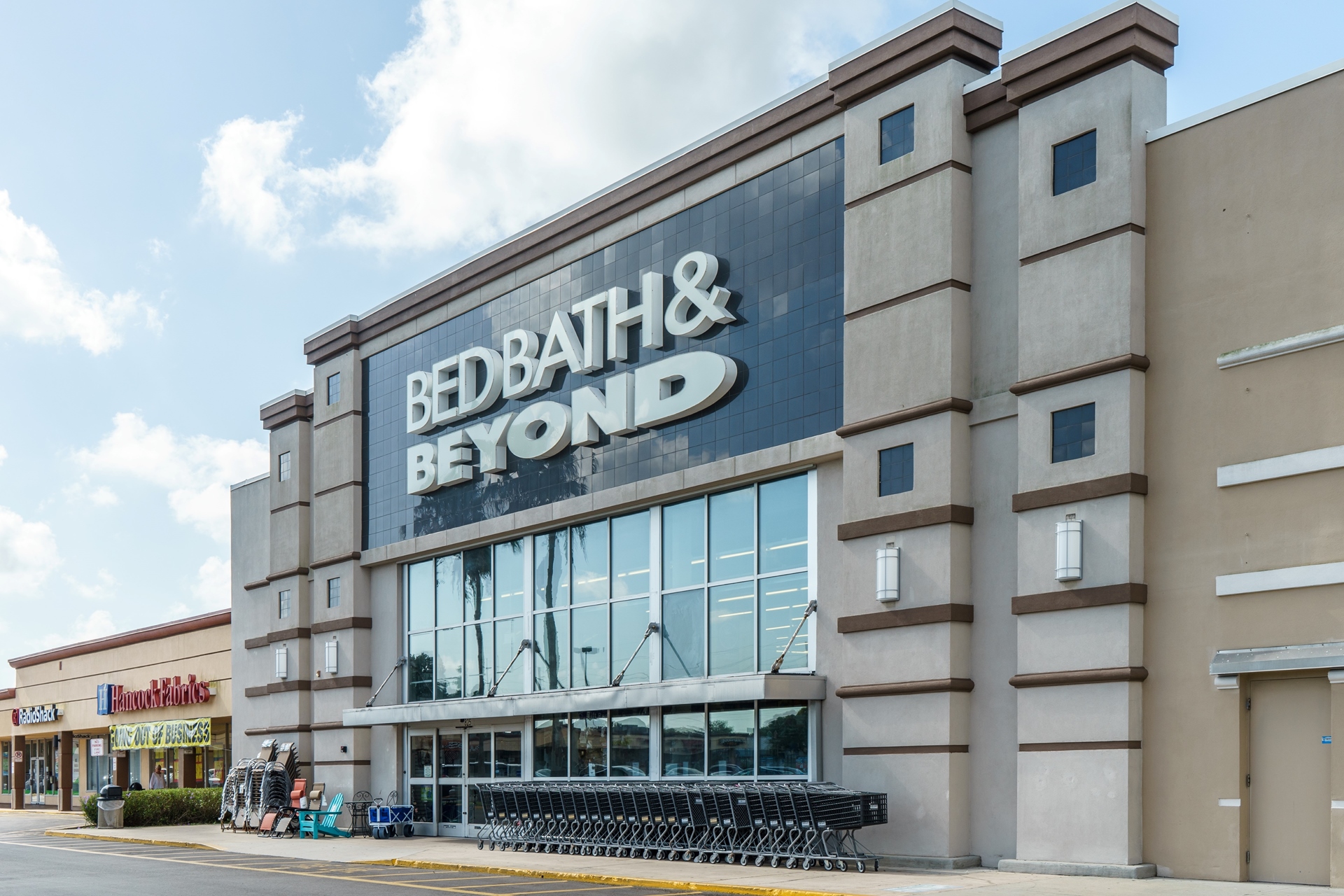
Bed Bath & Beyond at CORTEZ PLAZA EAST assumed a vacant Service Merchandise space in January 2003. The housewares retailer operated in the shopping center for 20 years. It closed for good in May 2023.
Photo from www.loopnet.com / Franklin Street

Colorado's Mile-High metropolis has produced an extraordinarily large number of failed, regional-class shopping malls; fifteen at last count. Fourteen of these complexes are listed as follows, using their original names;

*CHERRY CREEK CENTER [1953-2025]
*UNIVERSITY HILLS CENTER [1951-1996]
*LAKESIDE CENTER [1956-2007]
*WESTMINSTER PLAZA [1959-1999]
*WESTLAND CENTER [1960-1993]
*CROSSROADS CENTER [1963-2004]
*BEAR VALLEY CENTER [1966-1998]
*VILLA ITALIA [1966-2001]
*NORTH VALLEY CENTER [1967-1995]
*CINDERELLA CITY [1968-1998]
*NORTHGLENN MALL [1968-1998]
*BUCKINGHAM SQUARE [1971-2007]
*SOUTHGLENN MALL [1974-2006]
*WESTMINSTER MALL [1977-2011]

All have either been completely demolished, or else torn down, leaving a portion -or portions- standing. One contender, NORTH VALLEY CENTER, is still intact, but the mall is no longer used in a retail capacity. THORNTON TOWN CENTER [1989-2004] was demalled into a power center. Its 1989 grand opening date places the complex outside our timeline focus. In order to be inducted into the Mall Hall of Fame, a shopping complex must have been dedicated between the years 1946 and 1979.

Amongst all of the commercial carnage, the first mall-type shopping hub in Denver -and Colorado- endured over the years. Originally known as CHERRY CREEK CENTER -and then CHERRY CREEK WEST- the open-air complex was completed between 1953 and 1956. It became part of the enclosed CHERRY CREEK CENTER mall in 1990.  

In the mid-2020s, the original CHERRY CREEK CENTER was still intact. It had not been drastically renovated and retained its original structural integrity. Unfortunately for posterity, plans were drawn up to demolish the historic structure and replace it with another (yawn) "vibrant mixed-use community." 

This will include leased office spaces, residential components and underground parking. If things go as planned, Phase 1 of the new and improved CHERRY CREEK WEST could be completed in 2029. 

CORTEZ PLAZA
14th Street West / US 41 and Cortez Road
Manatee County, Florida

The first mall-type shopping center in the Tampa Bay Area was built on a 23-acre tract, located 33.6 miles southwest of center city Tampa and 2.1 miles south of downtown Bradenton. The shopping center site was situated in an unincorporated section of Manatee County known as South Bradenton. CORTEZ PLAZA, a 3 million dollar complex, was developed by a joint venture of Yonkers, New York's Eastern Shopping Centers, Incorporated and Bradenton's Hardin Realty & Insurance.

Bradenton's Edward Dean Wyke designed the facility, with assistance from New York City's Lathrop Douglass. The single-level structure, which encompassed approximately 185,000 leasable square feet, was built from the ground up in only 7 months. Its open-air shopping concourse was covered by a series of concrete hyperbolic parabaloids, similar to those that would be used in Minnesota's APACHE PLAZA mall.

CORTEZ PLAZA was officially dedicated on February 12, 1959. Radio station WTRL broadcast live from their Studio-On-The-Mall. Dick Doty, who handled public relations for the shopping complex, acted as Master of Ceremonies. An invocation was given by Reverend Fred T. Kyle, Junior. Next came speeches by C. Van Ness Wood (president of Eastern Shopping Centers), E. Colin Lindsey (executive vice-president of Belk-Lindsey Stores) and State Senator Edward Price, Junior (R).

Entertainment was provided by "Captain Hernan Cortez" (actor Milt Collion, wearing Spanish conquistador regalia), four Cortez Plaza Charm Girls, The Dandee Clown and WSUN-TV's Captain Mac.

Other dignitaries attending the grand opening included H.B. Cunningham (vice-president of the Kresge Company), William Dempsey (senior vice-president of the Grand Union Company), Edwin N. Homer (executive director of Eastern Shopping Centers), A. Sterling Hall (Mayor of Bradenton) and Walter S. Hardin (president of Hardin Realty & Insurance). A ceremonial ribbon was cut and ten CORTEZ PLAZA stores and services opened for business.

These were Fremacs For Men, The Cotton Shop, Camera's Incorporated, Carter's Family Shoe Center, Mary Jane Shoes, Coach Butterfield Toy Store, Walter S. Hardin Realty & Insurance, a 1-level (40,000 square foot), Tampa-based Belk-Lindsey, 1-level (21,000 square foot) S.S. Kresge 5 & 10 and (24,800 square foot) Grand Union supermarket.

By June 1960, the tenant list of twenty-seven stores and services included Walgreen Drug, Lerner Shops, Gordon's Jewelers, Wash-O-Mat, Stauffer Slenderizing Salon and Rita's Beauty Shop. The Inter-City National Bank was built onto the south end of the mall. Two freestanding structures had also been constructed; Adventurers Cafeteria and the Cortez Lanes bowling alley. 

Grand Union had been converted into a Publix on November 3, 1959. This store was expanded by 1,800 square feet and thoroughly renovated. It re-opened on June 16, 1960. Belk-Lindsey grew into an adjacent store space and dedicated its new Store For Homes on December 4, 1959. Belk-Lindsey now encompassed 54,400 square feet. 

In the mid-1960s, the first major mall addition was completed. The (33,200 square foot) CORTEZ SOUTH store strip was built on a pad adjacent to the Inter-City National Bank. Flowers & Foliage by Eiss welcomed first patrons on April 6, 1966. A Sears Catalog Store was dedicated on April 14th. Other CORTEZ SOUTH tenants included Cinderella Bootery, Luiz Maynard's Yarn Shop and the freestanding Bob's Pure Oil service station.

The second major addition was built east of Publix and implemented in two stages. The first consisted of a 1-level (116,000 square foot) Woolco discount mart. which opened on September 23, 1968. An entity known as Bradenton Associates developed the second stage. A two-building store strip, known as CORTEZ EAST, was added to the existing Woolco. 

One of the first operational stores was Allied Radio Shack, which held its grand opening in October 1971. The Jerry Lewis Twin Cinema showed its first features on December 25, 1971. Other tenants included Fill-R-Up Systems, the Hallmark Store and Caravelle Ice Cream. The combined area of all CORTEZ EAST structures was approximately 174,300 leasable square feet. CORTEZ PLAZA and the two associated store strips now spanned approximately 392,500 leasable square feet. 

The completion of DESOTO SQUARE MALL, in August 1973, cast a shadow over the older, open-air shopping hub. Built across Cortez Road, the fully-enclosed DESOTO SQUARE encompassed around 700,000 leasable square feet and contained seventy-seven stores and services.

CORTEZ PLAZA was sold to Coral Gables-based First Capital Companies in January 1978. A 1.5 million dollar renovation commenced in July that would update the mall's so-called "frumpy appearance." The main structure and CORTEZ SOUTH strip were refurbished with Spanish-style stucco exteriors and a lighted belfry was built. Most of the original mid-century modern design elements were either removed or covered over.  

Belk-Lindsey closed its CORTEZ PLAZA unit on June 15, 1979 and relocated to DESOTO SQUARE. Miami-based J. Byron assumed the vacant space and opened on September 11th of the same year. By this time, the mall had been re-envisaged as an "old world marketplace," with boutiques, push-cart vegetable and flower peddlers, strolling performers and magicians. 

Stores and services in the new and improved CORTEZ PLAZA included Baskin-Robbins Ice Cream, Publix, S.S. Kresge, Ace Hardware, Helyn Browns ladies' wear, June's Hallmark Card & Gift Shop, Camp & Hike Shop, Fun Machine, Jontie Magic Shop, Old World Tobacconist and T-Shirt World. Unfortunately, by the mid-1980s, the newness had worn off of the much-ballyhooed mall reinvention. It had become obvious that CORTEZ PLAZA could not compete with DESOTO SQUARE, no matter what new repositioning and redecorating concept was followed.

The shuttering of J. Byron, in January 1986, sent CORTEZ PLAZA into a downward spiral. Tenants bailed, leaving the complex seventy-percent vacant. Dallas-based Vantage Companies bought the struggling shopping hub in June 1987. They initiated a wrecking ball renovation in October. During the 10 million dollar demalling, the main mall structure and Cortez Lanes building were demolished. The CORTEZ SOUTH structure was left standing. CORTEZ EAST was not officially part of the complex.

A 276,000 square foot -thirty-one store- power center was built, which retained CORTEZ PLAZA as its name. The complex was anchored by a 1-level (87,000 square foot) Zayre discount mart, which opened its doors on September 9, 1988. Other major tenants included a (42,100 square foot) Publix, dedicated on December 1, 1988, and (11,100 square foot) Walgreen Drug.

Inline stores included Little Professor Book Center, Women's Discount Fashions, Buzzard's Nest Records and Courtesy Cleaners. The fourth CORTEZ PLAZA anchor was a (32,500 square foot) Circuit City SuperStore, which welcomed first patrons on November 16, 1989. A complex-wide grand opening was held on November 24th.

Zayre had morphed into an Ames discount store in October 1989. This unit was shuttered in September 1990. Montgomery Ward opened in the space on March 4, 1991 and was shuttered in March 2001. Burlington Coat Factory assumed the space and was dedicated on October 1st. By December 2003, CORTEZ PLAZA had changed hands three times. Beachwood, Ohio-based Developers Diversified Realty purchased the property in February 2007. 

An affiliate of Richmond, Virginia's Hackney Real Estate Partners assumed ownership of CORTEZ PLAZA in October 2018. At this time, there were twenty-four operational stores and services. These included Burlington, PetSmart, Shoe Carnival, Chuck E. Cheese and LA Fitness.

Sources:

The Bradenton Herald (Bradenton, Florida)
The Herald-Tribune (Bradenton, Florida)
The Tampa Bay Times
http://www.nreionline.com / National Real Estate Investor (website on Internet Archive Wayback Machine)
http://www.inlandse.com / Inland Southeast Property Management Corporation (website on Internet Archive Wayback Machine)
http://www.ddr.com / Developers Diversified Realty (website on Internet Archive Wayback Machine)
https://hackneyrealestate.com / Hackney Real Estate Partners
https://www.cinematreasures.org
Manatee County Historical Records Library
"Belk" article on Wikipedia
Lexington's Turfland Mall


Lexington's very first shopping mall was anchored by three department stores. On the east end was a single-level Montgomery Ward. The store, predating the mall by over a year, was dedicated in March 1966.
Drawing from Montgomery Ward & Company Annual Report 1966 

On the west end of TURFLAND was a 2-level McAlpin's. It was the fifth branch of the Cincinnati-based chain and McAlpin's first Bluegrass State store. 
Photo from "Wonderful Lexington Kentucky" brochure / The Greater Lexington Area Chamber of Commerce / Windsor Publications / 1969


The "spacious, ultra modern" McAlpin's included a Beauty Salon, Community Room, bridal registry and Turfland Room restaurant.
Photo from "Wonderful Lexington Kentucky" brochure / The Greater Lexington Area Chamber of Commerce / Windsor Publications / 1969


Here, and in living color, we see the McAlpin's Turfland Boy's Shop.
Photo from Mercantile Stores Company, Incorporated Annual Report 1967


On to the air-conditioned and carpeted TURFLAND shopping concourse. The mall entry of the W.T. Grant ("Grants") variety store appears on the right. It was the largest Grants in Kentucky.
Photo from Frank Properties


A closer view reveals a fountain, which serves as the focal point of Center Court. Graves Cox & Company, a Lexington-based men's wear retailer, operates the store on the left.
Photo from "Wonderful Lexington Kentucky" brochure / The Greater Lexington Area Chamber of Commerce / Windsor Publications / 1969


A wonderful world of stores without doors. In the summer of 1967, the shiny new TURFLAND MALL spanned around 531,200 leasable square feet and housed thirty-eight stores and services. Free parking was provided for 3,000 autos.

A snapshot of the mall's Main Entrance, which was rebuilt as part of a late 1980s face lift. It would be remodeled again in the late '90s.
Photo from Karl B. Raitz / University of Kentucky Libraries


The TURFLAND MALL of 1991 has three anchor department stores; J.C. Penney, Montgomery Ward and McAlpin's. There is also a McAlpin's For The Home junior anchor. The main McAlpin's store has just been expanded into adjacent space. This area is now the McAlpin's Juniors department. 


The TURFLAND Southeast Entrance was also refurbished in the late 1980s. That's a Kenny Rogers Roasters restaurant on the left. 
Photo from Karl B. Raitz / University of Kentucky Libraries


This aerial view of TURFLAND MALL dates to May 1996. 
Photo from Karl B. Raitz / University of Kentucky Libraries

An additional exterior view shows the results of a late '90s face lift.
Photo from Lexington-Fayette County, Kentucky


Here, we see one of the shopping center's double Dillard's locations. These were originally tenanted by McAlpin's. Dillard's shuttered the stores in April and June of 2008.
Photo from www.rubloffusa.com / The Rubloff Development Group


Walgreens defected from the enclosed mall into this freestanding unit in 1999. The store relocated to a newly-built structure, .2 mile southeast, in 2014.
Photo from Lexington-Fayette County, Kentucky

The east anchor of TURFLAND, Montgomery Ward, closed in March 2001. The land parcel was sold to Home Depot, who opened a new store in 2002.
Photo from Lexington-Fayette County, Kentucky


The mall's LongHorn Steakhouse was originally a Cooker Bar & Grill. That restaurant opened in December 1998.
Photo from Lexington-Fayette County, Kentucky

TURFLAND circa-2007. This was just before Dillard's did an "anchor's away," which would leave the shopping hub with just a single destination store to sustain it. By this late date, Lexington's first shopping mall was in dire straits. Out of a total of forty-four store spaces, twenty five were vacant.   

TURFLAND MALL TENANTS 2007:

DILLARD'S / DILLARD'S FOR THE HOME / HOME DEPOT / Christmas Mills Winery / Cici's Pizza / Cinema 99 / Dakota Watch Company / Dink's Cafe / Fashion Bug Plus / Fashion Shop / Foot Locker / GNC / Gold Star Chili / Hollywood Nails / Old Kentucky Chocolates / Rainbow / Staples / Spencer Gifts / Steakfest / Waldenbooks 

OUTPARCELS:
Chick-fil-A / LongHorn Steakhouse / O'Charley's / Ruby Tuesday / Walgreen Drug / Whitaker Bank (ATM)

A rendering of TURFLAND TOWN CENTER, which was proposed as a replacement for TURFLAND MALL. The mixed-use complex would have retained the Home Depot and main Dillard's buildings. Approximately 133,000 square feet of new retail, residential and data center space were to be built.
Drawing from http://www.turflandtowncenter.com


TURFLAND MALL was given a wrecking ball renovation in February 2014. Three store structures were left standing; Home Depot, Staples and McAlpin's / Dillard's. The University of Kentucky repurposed the latter as a medical and dental clinic.
Drawing from http://southsidermagazine.com
TURFLAND MALL
Harrodsburg Road / US 68 and Lane Allen Road
Lexington, Kentucky

Ground was broken for Lexington's first fully-enclosed shopping center in November 1965. TURFLAND MALL was built on 41.6-acres, located 2.5 miles southwest of downtown Lexington. The single-level complex was developed by New York City's Frank Properties.

The 5 million dollar retail complex spanned approximately 531,200 leasable square feet. It was added to a freestanding, 1-level (187,000 square foot) Montgomery Ward, which had been dedicated on March 17, 1966. A 2-level (74,000 square foot) W.T. Grant welcomed its first shoppers on August 10, 1967. Cincinnati-based McAlpin's built a 2-level (167,500 square foot) store. It was officially dedicated -along with the mall- on August 24, 1967.

When fully-leased, TURFLAND MALL housed thirty-eight stores and services. These included Walgreen Drug, Wenneker's Shoes, Graves-Cox & Company men's wear, Hymson's Tots & Teens, Spencer Gifts, Three Sisters ladies' wear and Blue Boar Cafeteria. A (17,900 square foot) Winn-Dixie supermarket was a south parking area outparcel. On December 27, 1967, The General Cinema Corporation Turfland Cinema On-The-Mall made its debut. 

Two additional mall-type complexes were built in Lexington; FAYETTE MALL (1971) {2.4 miles southeast, in Lexington} and LEXINGTON MALL (1975-2011) {4.1 miles east, also in Lexington}. The three shopping hubs coexisted peaceably for several years but FAYETTE MALL gained a competitive edge after a major expansion in 1993.

Anchor store rebrandings commenced at TURFLAND MALL in 1973. Grants was converted into a Grant City discount mart. The store closed for good in late 1975. J.C. Penney opened in the vacant space on April 21, 1976. Penney's  closed their TURFLAND store on November 4, 1993, when they relocated to FAYETTE MALL. 

Meanwhile, TURFLAND MALL had been renovated, with the refurbishment done over the course of four years. The Graves-Cox men's store was remodeled in 1987. A vacant Winn-Dixie was enlarged, with a 1-level (34,000 square foot) McAlpin's For The Home opening in the building on September 3, 1989. The main McAlpin's was also remodeled. It was expanded, taking over an adjacent entrance hall and three inline stores. This project was completed in 1991. McAlpin's Turfland now covered 215,000 square feet. A final facet of the renovation updated the mall's exterior with new entrances.  

Over the years, Turfland Cinema On-The-Mall would go through several changes. It was twinned in the 1970s. USA Cinemas bought the venue in January 1987. It would eventually operate under the Loew's banner. The theater closed in August 1990. It re-opened -as a 1 dollar movie house- in May 1991 and was in operation until 2007.

On October 17, 1998, all McAlpin's locations, including the TURFLAND MALL unit, were rebranded by Dillard's. The Arkansas-based retailer also renamed the McAlpin's For The Home store as a Dillard's For The Home.

The Rubloff Development Company, of Hoffman Estates, Illinois, bought TURFLAND MALL in September 1997. The shopping hub had been enduring intense competition from FAYETTE MALL for several years and was in a downward spiral. A comprehensive renovation got underway in July 1998. During this project, the McAlpin's For The Home moved into the J.C. Penney space, which had been vacant for over 4 years. 

New marble flooring and landscaping were installed in the shopping concourse. Three mall entrances were updated (again) and three freestanding restaurants built in the south parking area. Cooker Bar & Grill opened in December 1998, Ruby Tuesday in March 1999 and O'Charley's in May of the same year. TURFLAND MALL was rededicated in June 1999. Unfortunately, another retail rival had come on the scene. The HAMBURG PAVILION power center {6.2 miles east, in Lexington} debuted in October 1997. 

Troubles at TURFLAND were exacerbated by the shuttering of Montgomery Ward, in March 2001. Home Depot demolished the old Ward's and built a 1-level (119,500 square foot) store. It opened for business in 2002, but did not connect with the shopping concourse. Hopes for a prosperous future at TURFLAND were dashed for certain in 2008, when Dillard's shuttered both of its "underperforming" stores. Dillard's For The Home shut down in April, with the main store going dark June 22nd. The mall closed for good on October 1, 2008.

A redevelopment plan was announced in 2009. TURFLAND TOWN CENTER, an open-air, mixed-use project, was proposed. The bulk of the mall was to be razed, leaving the Home Depot, Staples and main Dillard's structures standing. Three outparcel restaurants, and a freestanding Walgreen's, would also remain.

New construction would have included two 75,000 square foot data centers, fifty inline store spaces, urban loft-type condominiums and a parking garage. Unfortunately for Rubloff Development, a new tenant for the McAlpin's / Dillard's building could not be found. By June 2012, Rubloff had defaulted on their mall loan. The bank foreclosed and the virtually vacant and deteriorating property was sold in December.

The new owner, Lexington's Ron Spritzer, would repurpose the moribund mall under the auspices of a concern known as Turf Development. Demolition got underway in February 2014. The Staples, Home Depot and main Dillard's buildings were left standing, along with eight outparcel structures. The University of Kentucky acquired the abandoned Dillard's and renovated it into the UK Health Care at Turfland medical clinic and UK Dentistry at Turfland dental facility. A grand opening was held on April 20, 2015.  

Sources:

The Lexington Herald-Leader
The Louisville Courier
http://movie-theatre.org / Mike Rivest
http://cinematreasures.org
"Protecting Its Turf" / Retail Trade Magazine / Amy Baldwin / May 1, 1999 
University of Kentucky Libraries 
Karl B. Raitz Photo Collection
James Edwin Weddle Photo Collection
Clay Lancaster Slide Collection
Lexington Public Library
http://www.rubloffusa.com / The Rubloff Development Group
http://www.turflandtowncenter.com
http://www.fayette-pva.com / Lexington-Fayette County Property Value Administrator
http://uknow.uky.edu
"Turfland Mall" article on Wikipedia 
Lexington's Fayette Mall


Stores in Lexington's second shopping mall opened for business between October 1971 and May 1972. The original complex was promoted with this logo.
Graphic from the Jacobs, Visconsi, Jacobs Company